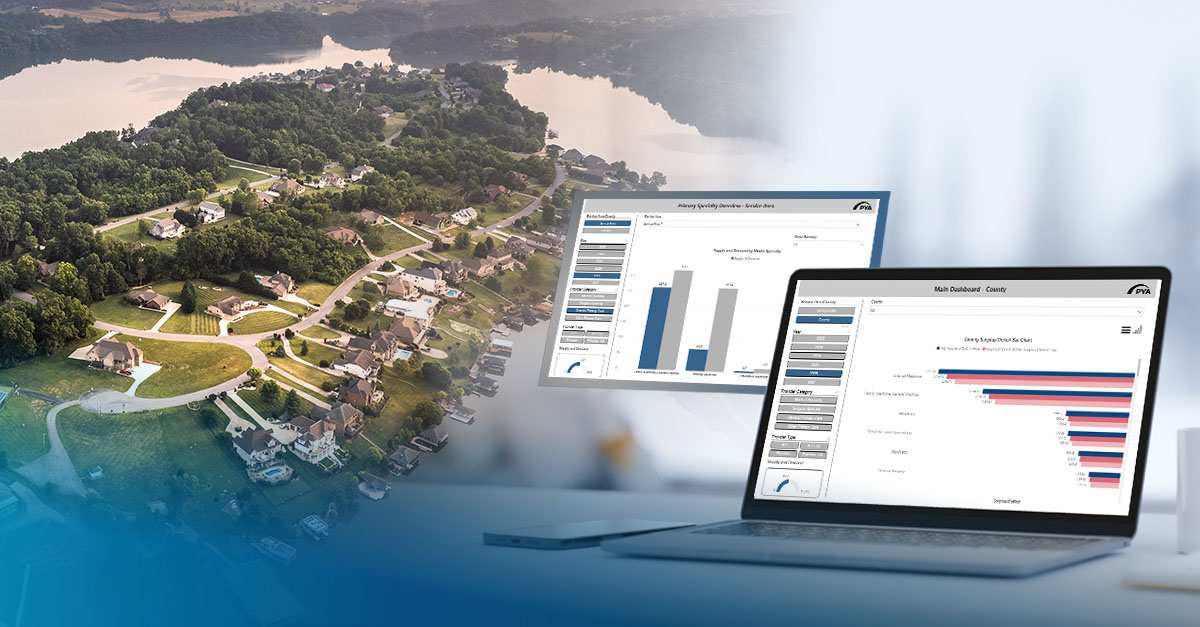



In PYA’s video series, “RHTP Roadmap: From Award to Outcome,” the second episode, “Utilizing Facility Data to Develop Your RHTP Strategy,” focuses on how healthcare organizations can use facility data to develop a strong capital funding strategy under the Rural Health Transformation Program (RHTP). Raphael Sartorato, Director of Capital Projects with PYA affiliate Realty Trust Group (RTG), explains how facility assessments can help organizations document needs, demonstrate readiness, and compete more effectively for state-administered RHTP funding.
Sartorato emphasizes that RHTP favors modernization and repurposing of existing facilities rather than new construction. To plan for upgrades, he explains how facility condition assessments (FCAs) help create decision-grade data by identifying deficiencies, estimating costs, prioritizing capital needs, and supporting long-term planning.
In the episode, healthcare leaders will learn how combining accurate and thorough facility condition, utilization, care flow, and compliance data can enable their organizations to make informed decisions, create fund-ready project scopes, and better align facility investments with patient care goals.
The episode encourages organizations to
- Use FCAs to establish a capital planning baseline
- Document facility needs with objective condition and utilization data
- Prioritize repairs, modernization, and upgrades in existing facilities
- Repurpose underutilized space to improve care delivery and capacity
- Identify compliance, accessibility, and safety risks early
- Develop phased capital plans supported by accurate cost forecasts
- Focus on adapting existing space rather than pursuing new construction
- Prepare fund-ready project scopes backed by documented evidence
Contact PYA’s Rural Health Transformation team for more help with RHTP decision-making and implementation.
Stay informed:
- Submit questions about RHTP implementation and the video series on our RHTP webpage.
- Watch for episode announcements on PYA’s LinkedIn.
- Catch the videos on our website and our YouTube channel.
Video Summary
Rural providers considering facility-related Rural Health Transformation Program (RHTP) opportunities need more than a list of projects. They need current facility data that documents condition, utilization, need, and readiness.
In this episode of PYA’s RHTP Roadmap: From Award to Outcome, Raphael Sartorato, Director of Capital Projects at Realty Trust Group, explains how facility condition assessments can help organizations establish a defensible baseline, prioritize capital needs, and identify opportunities to improve care or add capacity within the facilities they already operate
Key Takeaways
- Facility-related RHTP strategy should begin with documented condition and utilization data rather than anecdotal capital requests.
- The session describes targeted adaptation of existing facilities, equipment, systems, accessibility, safety, and space as the central capital-planning lens, while emphasizing the limits discussed for new construction and expansion.
- A facility condition assessment can produce a deficiency inventory, cost-to-correct estimate, prioritized multi-year capital forecast, and facility condition index.
- Condition data is most useful when reviewed together with care flow, utilization, and compliance requirements.
- A strong facility baseline can shift capital planning from emergency response toward phased, prioritized investment and can support future funding requests.
- Facility opportunities discussed include converting underused space, right-sizing emergency department areas, integrating behavioral health functions, and consolidating services within existing footprints.
Frequently Asked Questions
What is a facility condition assessment in an RHTP planning context?
A facility condition assessment, or FCA, is a standardized on-site evaluation of building systems, their condition, and remaining useful life. As described in the video, an FCA can produce a deficiency inventory, cost-to-correct estimates, a prioritized multi-year capital forecast, and a facility condition index that can be compared across sites.
Why does facility data matter for an RHTP capital strategy?
Facility data gives an organization a documented baseline for deciding what needs attention, what is worth fixing, and how proposed work connects to operational needs. The video emphasizes that condition and utilization data can make capital requests more evidence-based and help organizations prepare before funding opportunities arise.
What facility improvements does the video discuss for RHTP funding?
The video discusses repairs and upgrades to existing infrastructure and equipment, minor renovations within existing improved space, and accessibility, safety, security, access-control, and wayfinding improvements. It also explains the program limits and capital cap discussed in the presentation, so organizations should confirm current state and award requirements before acting.
What should organizations evaluate in addition to facility condition?
The video recommends evaluating four lenses together: facility condition, care flow, utilization, and compliance requirements. Looking at all four can help leaders distinguish between what is broken and what is strategically worth improving.
How can FCA findings support long-term capital planning?
FCA findings can help organizations inventory and prioritize deficiencies, estimate future costs, compare sites, and move from emergency response toward a phased capital plan. The resulting evidence can also support future scopes, budgets, and funding requests.
Transcript: Utilizing Facility Data to Develop Your RHTP Strategy
Speaker: Raphael Sartorato
Hello, I’m Raphael Sartorato, Director of Capital Projects at Realty Trust Group. This is the second in a short series we’re running on the Rural Health Transformation Program. Today’s session is narrow on purpose: how you use facility data to build an RHTP strategy, not the whole program here. That just a part where your buildings become evidence. Now here’s how these next few minutes are going to be laid out. Three parts today that we want to focus on. First is the program, what RHTP will fund inside the footprint you already own, and what it will not. Second is the baseline, how a facility condition assessment produces decision grade data. Third is the opportunity. These are these are the practical moves that will improve care or add capacity without adding a building. Just one quick housekeeping note, because it matters in a healthcare room. When I say FCA today, I mean Facility Condition Assessment, not the False Claims Act. Same acronym, very different meaning. So this session is built for critical access and small rural hospitals, for regional systems, rural sites, and the state partners and boards making these calls. All right, before we get into it, just 30 quick 30 seconds on why we’re the ones telling you this. RTG is a national healthcare real estate advisory firm, advisory development and operations, all of it in healthcare. Three things to know here: we work in healthcare real estate exclusively. We work across owned and leased portfolios, and we have grant-funded capital experience, which means we know what a reviewer typically likes to see. Our discipline is that we assess before we recommend. That is the whole premise of today’s session: assessment. So, what is the program? RHTP is $50 billion. That’s $10 billion a year, fiscal year 2026 through 2030, or five years. The most important structural fact on this slide is you are not competing for a CMS grant. You’re competing for a state subaward. CMS distributes to the states, and then the states in turn, allocate your audience is your state’s program office, and their rules and the rules that bind you. The second fact: facility modernization is one eligible spending category among many, such as workforce, technology, and care model priorities. Nobody gets funded for having a tired building. They get funded for documented need and demonstrated readiness. Major takeaway here is that readiness beats speed. This is a five-year program, and the strongest requests arrive with condition and utilization data already in hand.
All right. Now, what can the money actually touch? RHTP favors targeted adaptation, not new construction. I think that’s the main point for this slide here. What is allowable? Repairing existing infrastructure and equipment upgrades, repairing, replacing like for like, or upgrading building systems and medical equipment to reduce long-term operating costs and sustain current operations. Minor renovations to repurpose existing space, reconfiguring already improved spaces within the existing envelope for new or expanded clinical use, including relocating partitions, walls to create patient rooms, exam rooms, or telehealth spaces, for instance, and then accessibility, safety, and wayfinding improvements, ADA upgrades, security and access control, and permanent functional signage that support patient access to care. So those are the allowable examples. Here, here’s the main boundary: new ground-up construction or expansions are restricted. Every cost has to sit inside a footprint you already have, and it has to be documented in a budget narrative.
There’s a ceiling too. Category J capital and infrastructure is capped at 20% of a state’s total award per budget period, so the capital pool inside the pool is smaller than the headline. Numbers suggest that we just talked about before. Put those two together, and the strategic question kind of changes. It stops being what do we want to build, and it becomes what do we already own? What condition is it in, and what could it become? You cannot answer that from memory. You need a baseline.
Brings us to the second part today. Facility condition assessment is a standardized on-site evaluation of your building systems, their condition, and their remaining useful life. It covers structure, envelope, HVAC, electrical. plumbing, life safety, and accessibility. One way to think about it is if you took the building and turned it upside down and shook it, everything that doesn’t fall off the building is essentially part of this FCA. It produces three things: a deficiency inventory, a cost to correct, and a prioritized multi-year capital forecast. And it scores you: the facility condition index, repair need divided by replacement value, which is comparable across every site you own. So, what is the typical effort? Because this is the question we always get. So, this effort takes weeks, not months. The field work is days per site. The draft findings in four to six weeks or so, and you refresh every three to five years to make sure that the report is always updated with current events. It is scored against the codes your surveyors already enforce, such as life safety, Joint Commission, state licensure. That’s deliberate. It means a finding in this report maps to a consequence your board already understands.
So you have the data. What do you do with it? Okay, there are four lenses here that we need to look through, and the discipline is for us to look through them all at the same time, so the first is condition, what is failing now, and where is deferred maintenance raising risk? Second is the care flow, where do patients, staff, supplies, or information double back on themselves? Utilization, which rooms, wings, and hours are persistently underused. Compliance. What do licensure, life safety, accessibility, FGI, and CMS actually require? So the condition alone will tell you what is broken. The condition plus utilization tells you what is worth fixing, the prioritization becomes key. That combination is what makes a future ask fundable. If an organization had previously undertaken an FCA, they would have been well prepared to act quickly when funding opportunities present themselves. But it’s not too late, as this will be valuable insight into future funding, we’re also seeing some other states include more capital-focused grants through other means that, though outside the scope of RHTP itself, align closely with RHTP initiatives. An example is the RAMP grant in Tennessee.
Okay, you have the data. Understand the four lenses, but here’s here’s what that actually changes. Okay, this is the shift. Today, without a baseline, without an FCA, there are unforeseen failures in your facilities, an unknown backlog, and capital asks backed by anecdote. With that baseline, with that FCA, deficiencies are inventoried. They’re known. They’re costed, dated, and then they’re prioritized. The management changes. The management change is from emergency response to a phased capital plan that keeps service running. This isn’t a plan where you shut down your ORs to fix a chiller. It’s planned and understood. There are five compounding effects that we can see here in the middle of this slide. The first one is deferred maintenance control. You intervene earlier, before deterioration compounds cost. That lets you plan. Second one, every dollar you request ties to document a need that. Evidence is key. Aging systems and code exposure surface before a surveyor finds them, gives you the time to regroup and improve and get things back to where they need to be before the surveyor shows up. Ratings standardize across sites so you can sequence investment and the findings guide five to 10 years of capital decisions. One assessment, but years of leverage.
Now let me show you what actually gets looked at. Okay, here what you see. We don’t have to dive in too deeply here into the details, but just quickly so you can see the scope concretely, there are 10 component categories that we look at when we conduct a site visit for the FCA. There’s the site, the structure, the envelope, mechanical, electrical, plumbing, life safety, vertical transportation, interior finishes, and accessibility. Each one of these is observed, rated, and photographed. I won’t walk all 10 here today. The point is that nothing on this diagram is left to opinion, it is an objectively thorough analysis conducted by experts in the field who like to walk a lot and crawl through small dark spaces to document your building through sophisticated software intentionally designed for FCA’s. And I’m one of those people who recently investigated every ounce of a 400,000 square foot hospital, from rooftop to ORs to these forgotten basements. Not only were the individual assets analyzed, we were able to also graphically illustrate the building additions by walking the transitions, showing how the hospital had evolved from 1954 to today. This is it’s also a huge head start in the eventual master planning of a campus that will then increase efficiency and quality of patient care. And FCA’s are able to scale up or down. They’re designed for buildings of all sizes and scope. They’re designed for buildings like the one you’re seeing here, a larger hospital like the one I just explained. They’re also designed for smaller facilities, single story, two stories, wherever they are in the country. The importance, though, is accuracy when we do our site visits, thoroughness. We talked about rooftop to the basement. Thoroughness is important. Let’s open every door. Let’s let’s look at every asset. But accuracy is key. During our site visits, it’s imperative that the appropriate property engineers handpicked to accompany us the entire way, these engineers take pride in every changed light bulb, and they remember history. They are great partners, and they can aid in keeping the data as accurate as possible.
Okay, now that I’ve taken you through a little bit of the how the sausage is made, let’s see what lands on your desk. The deliverable comes in two tiers. First is the portfolio level for you and your board: an executive summary with consolidated KPIs, a capital plan with five-year forecasts, benchmarking that identifies your outliers, and a portfolio-wide view of condition risk, and then on the right is the building level tier. These are for your facilities and finance teams. It’s a condition assessment per site, a capital cost forecast, key findings from our site visit, a verified asset schedule, and this asset schedule it includes serial numbers, includes the age of the assets, the condition upon our analysis, and it includes photographic documentation of every deficiency. All of it non-proprietary format, handed over in a PDF or Excel, so you can own it and you can edit it, and it is not locked inside someone else’s proprietary software. It is a differentiator, and people notice it.
All right, and the last part is the opportunity. Okay, four moves we see repeatedly in rural facilities, all of them inside existing footprint, which is important in what we’re discussing here today, and all of them carrying specific design compliance tests that must be addressed along the way. First one is inpatient to ambulatory, where you can convert underused rooms into exam, consult, or treatment spaces. Right-sizing the ED. Consolidate bays and simplify triage around actual demand. Integrate behavioral health. This one’s quite common. Add consult intake, telehealth, or low acuity stabilization, and share and consolidate, co-locate services, share support functions, and reclaim fragmented space. And quick caveat here: the design of each of these is led by an architect or space planner, while RTG we will support the budget, the phasing, the scheduling, and then we will oversee the overall program management. But we do need very key to have the architect as part of the of these processes. And real quick back to the importance of accuracy. We completed an FCA for an older, underutilized facility a few years ago, much smaller than the examples we were showing before. And through our assessment, we budgeted approximately $4 million to right-size their ED. We fast forward to today, where the project is well underway and the design is completed. We finally received pricing back from the contractor, and we were very happy to see that the difference from our estimate back in the FCA was only $10,000. That’s pretty accurate. I’m not saying every one of them is going to be that accurate, but they should be relatively accurate. This one is just very close, but that’s why accuracy and thoroughness is key. It allows for confident planning, so that when we get to the moment we’re in right now in the project, we’re not shocked by cost. We are prepared. The budget is ready. The project can keep moving forward, and we can meet your goals.
Okay, four things to take back to your board: adapt, don’t build. The capital works inside what you already own, not on ground-up construction. The data wins subawards. Remember, the states allocate against documented need, and they will do it again every year through 2030. Condition and utilization data is the analyzed documentation, which is why the FCA is key. It contains that utilization data in that condition. Design beats size. Most access gains come from how space is used, not from how much of it you have. And start before the ask. An FCA turns findings into a scope you can submit with confidence, and a reusable evidence base for every future request provides you that confidence you need to keep things moving.
Your next step is just three moves: inventory condition and use, identify one or two plays, and package a fund-ready scope. This is the path to get it done, to get it through the next step. Baseline the building before you make the request. That, in a nutshell, is what this is all about. Thank you so much. You have my contact information. Please feel free to reach out to me anytime, and we can discuss more. Thank you.