


In the 2026 Medicare Physician Fee Schedule Final Rule, the Centers for Medicare & Medicaid Services (CMS) made permanent its COVID-19-era policy regarding virtual direct supervision.
What Changed in the 2026 MPFS Final Rule for Direct Supervision?
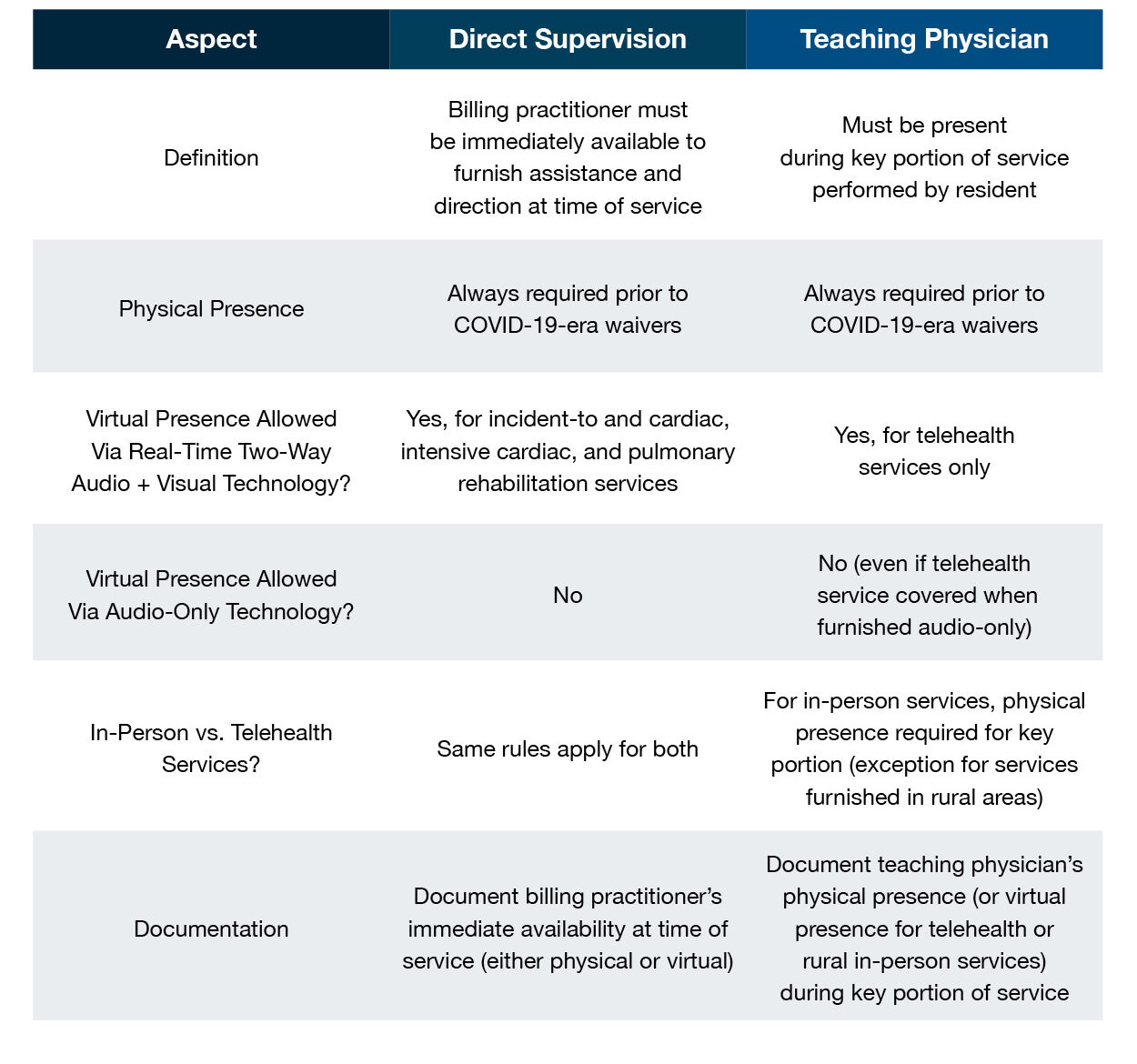
Specifically, CMS changed the definition of direct supervision to permit the supervising practitioner to be immediately available via real-time two-way audio + video technology (not audio-only) for incident-to services covered under 42 CFR 410.26 and for cardiac, intensive cardiac, and pulmonary rehabilitation services. (In the 2026 Hospital Outpatient Prospective Payment System Final Rule, CMS also made permanent virtual supervision for these rehabilitation services furnished in hospital outpatient departments.) Virtual supervision, however, is not permitted for services assigned to 10- or 90-day global surgery indicators.
What Are the Teaching Physician Requirements Related to Telehealth Under MPFS 2026?
CMS also made permanent its policy permitting teaching physicians to use real-time two-way audio + video to satisfy the presence requirement for resident-furnished telehealth services. Rather than requiring the resident and the teaching physician to be in the same location during a telehealth visit, these services can be delivered via a three-way audio + video conference. (While Medicare covers some audio-only telehealth services, reimbursement for such services when furnished by a resident requires audio + visual.)
When Is Physical Presence Still Required?
The teaching physician’s physical presence during the key portion of the service performed by a resident is still required for in-person services (other than the existing exception for services furnished by residents in rural areas).
Comparison of Direct Supervision and Teaching Physician Requirements Under MPFS 2026
PYA’s Revenue Integrity team can help your organization track regulatory changes and review and revise workflows and documentation processes to ensure compliance with payer requirements.


